Author Archives: gracienumber1

Three Perfect Days in GANDER

Gander—and it all started here.

There is screeching ceremony taking place in the bar tonight. It includes drinking a shot of screech (local rum), kissing a codfish on the mouth and answering the perfectly innocent question of ‘Is ye an honorary Newfoundlander?’ with the response ‘Indeed I is me ol’ cock, and long may your big jib draw.’ I never did find out what it meant.

Newfoundlanders are friendly, hospitable folk and none more so the people of Gander. When the USA closed its airspace on September 11 2001 Gander once again became the hub of transatlantic traffic looking for a place to land. Thirty-nine flights diverted to Gander International Airport and 6,500 people descended on the town—almost doubling its population overnight. The kindly folk of Gander opened its hotels, homes and public buildings to accommodate the diverted passengers and crew.

Built in 1936 Gander International Airport was once the thriving hub for international air traffic that stopped at Gander to refuel before continuing on to Europe. Passengers included the rich and famous from the USA and Europe with Nikita Khrushchev, Marilyn Monroe, Winston Churchill and Franklin D Roosevelt filing through its customs area more than once. Fidel Castro was a frequent visitor with Gander being the stop off point between Havana and Moscow.

A drive around Gander’s main streets gives the first clue to its background with streets named after the Wright Brothers, Amelia Earhart, Charles Lindberg and Alcock and Brown.

The town’s North Atlantic Aviation Museum on the Trans Canada Highway opened in 1996 and as well as providing a history of aviation, it also offers displays of fighter and bomber aircraft including a beautifully restored Dehavilland Tiger Moth, and one of the newest displays showcases a B17 Flying Fortress. And if you have plane buff in your midst you’ll probably have some difficulty extracting them from the gift shop, which sells model aircraft and books on aviation as far back as Icarus.

Aviation aside, there are other things to see and do in Gander and the surrounding region.

Gander is situated 40 kilometres south of Gander Bay with its beautiful coves, fishing communities and array of birdlife, and an hour’s drive west will take you to Grand Falls-Windsor, home to the Salmon Festival in July each year. A further half-hour will see you at Twillingate Islands with its rugged, scenic coastline of bays and fjords and a backdrop of National Forests with walks and guided tours.

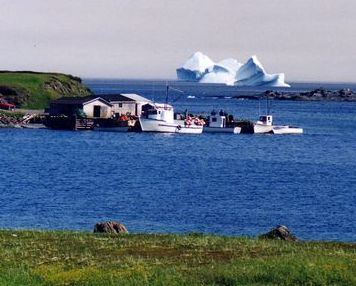
In the summer months Twillingate provides the breathtaking beauty of iceberg watching. The bergs, small by iceberg standards yet still bigger than ten storey apartment block, are break-offs from the main iceberg and float silently along the coastline to hover for a while before gliding away, and, if icebergs don’t tempt you, you can take a whale watching tour. From May to September daily boat tours can take you out to see whales, seals, dolphins and the myriad of bird colonies clinging to the rocks.
And the town doesn’t sleep in the winter. If you’re an outdoorsy type an 18 hole golf course overlooks Lake Gander and is open all year round. Just three kilometres west of Gander the Nordic Ski Club enjoys 16 kilometres of trails suitable for all levels of skiers with some lit for night skiing. Or you could try your hand at curling. The Gander Curling Club has a lounge, dining and dance facilities for those who don’t fancy sliding 20 kilos of stone across a sheet of ice. There’s also a snowmobile club and figure skating at the local rink.

Restaurants and bars are aplenty and many offer local specials with freshly caught lobster, crab and squid that you can wash down with the aforesaid screech to keep you warm. If you don’t fancy seafood there is a good selection of Asian and Italian restaurants to choose from, plus the ever present McDonalds, KFC, and pizza takeaways.

Although the summer can be pleasant with an average of 22 degrees Celsius, winter temperatures can drop to as low as minus 13.

That fur-lined aviation jacket could come in handy.
Three Perfect Days in BANYULS dels ASPRES

It’s just as well there is no other vehicle coming towards us as this particular village street is only as wide as our car. We turn into Rue d’Andorre and park outside number 6. This is our home for the next three days.

What? Where? Well I could have done Paris or Provence, but let’s face it they’ve been done to death, and I did say at the outset I would take you to places you had never heard of. So welcome to Banyuls dels Aspres—not to be confused with Banyuls sur Mer—which is of course, on the mer. The village of Banyuls (let’s call it that) is a small community in the hills of Languedoc which was once a Province of France and is now known as Languedoc-Rousillon. The closest town is Le Boulou, and the closest city (and airport) is Perpignan about half an hour away.

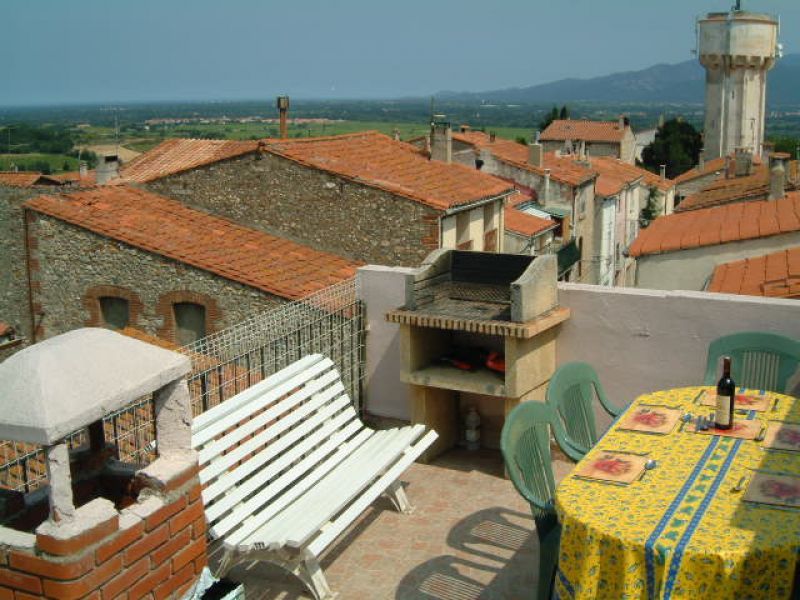
We are staying in a maison-de-village and the front door opens into one room with a polished terracotta floor and bright white walls. We enter into the living area which has three large deep red sofas, a coffee table, bookshelves (chock full of books), and a TV. To the left there is modern kitchen, and behind that, a large solid timber dining table and six chairs. The house is four storeys with bedrooms and bathrooms on the next two levels, and the top level reveals a roof garden complete with fireplace, BBQ, furniture, and the omnipresent geranium pots.

Rooftop and view to vineyards

We unpack our groceries (bought en-route from Perpignan) and settle down with a supper of fresh bread, cheese, saucisson, and a nice bottle of red, before climbing four flights of stairs to the bedrooms. We are woken a 6am by the sound of church bells, and after a breakfast of coffee and pain-au-raisin we decide to explore the town.

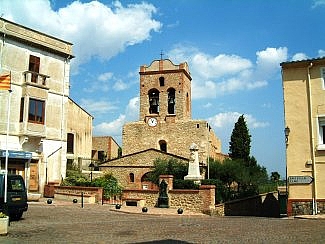
Banyuls is a mix of old and new. The old—the Town Square with its Maire office, café/bar, hairdresser and boulangerie, probably looks much the same as when it was it was built, with its cobble-stones and typical grey stone buildings. The streets around the Town Square are narrow; the maisons-de-village are tall and tower over the town, and the beautiful old church just by the square is responsible for the bell ringing. The old men sit outside the café sipping coffee and smoking Gauloises, before shambling over to the boules court beside the church.

We walk a little way down the hill to the vineyards and come to the new. White and terracotta single storey villas, pristine lawns and gardens; a kindergarten; a few more shops including a Pharmacie proudly advertising the number of mushrooms it can identify; a group of single level townhouses, and the Cave with its own bar and restaurant. Past the village cemetery and back up the hill, the cobbles return marking the boundary to the old.

Village square and church

Back in Rue d’Andorre, the garage next door is open and a young man is endeavouring to reverse his black Mercedes into the street. It’s a tight fit and he gets out and yells up at one of the windows “Papa”. He turns and nods in our direction. He’s wearing a black suit, black shirt, black tie, black polished shoes and aviator sunnies. We decide on the spot that he’s a Marseilles Boy (well, either that or a real estate salesman) and sidle up against the wall trying not to touch his car. Papa—who is now shouting and gesturing as his son reverses—by contrast wears dungarees and a cloth cap.

After lunch on the roof garden we study the map. A 10 minute drive will take us across the border to Spain, and the border town of La jonquera. La jonquera is a truck stop with enormous freight trucks from all over Europe rolling down its streets. Huge truck parks are set aside off the main street so the drivers can take a nap before entering the Barcelona highway. Interestingly, La jonquera is also home to the biggest brothel in Europe which offers 150 prostitutes. Now I’m not saying there’s a connection there, but …

In the evening, dinner is at the big wooden table and we feel very regal as we sit at opposite ends with the candelabra in the centre. We extol the virtues of the perfect lamb steaks, purchased from the charcouterie van in the square, accompanied by a tomato and olive salad and nice drop of Beaujolais. Later we try very hard to watch a French quiz show on TV but by the time we’ve worked out one question and its answer they’ve moved about three further on, so we give up and decide to plan our next two days instead.

We could visit Collioure, a picturesque artists’ town on the coast road to Spain; Argelès sur Mer, a fairly new development of apartments, units, and townhouses, but sporting wide tree-lined streets and parks; we could, if we dared, revisit La jonquera and continue into Spain calling into the seaside towns of Roses, LLança, and Escala, or even venturing as far as Barcelona.

But for now, we pour another red and consider ourselves blessed.

Pat-a-cake, Pat-a-cake

I am the cup-cake Queen.

Some months ago when I agreed to bake cup-cakes for a morning tea, I did what most self-respecting non bakers would do. I panicked. What was I thinking?  I don’t cook. Well I do, and I’m really brilliant at some things such as one-dish meals—throw it all in and shove it in the oven; slow cooking—put everything in the slow cooker, turn it on, and forget about it for eight hours, and stir fry—in the dim and distant past I did a Chinese cookery course and some things are just never forgotten. But cup-cakes?

I stressed out. I prowled the internet looking for simple recipes. Have you seen some of those pictures on food blogs? OMG! They make Martha Stewart look like a beginner! Some of them have iced flowers on the top of the cakes … iced flowers. WTF. Speaking of Martha, I recall the only show of hers I’ve ever watched (don’t ask) and it was entirely about cup-cakes. Apparently there were 1,000 cup-cakes on the set. Now that’s inspiring.

I turned to recipe books. They were no better. Then someone told me that the photos in recipe books are real photo shoots that take hours to do, and then they’re photo-shopped. Good grief—all you’re going to do is eat it.

I had decided early on that if nothing else my cup-cakes would look good. I bought some colourful paper cups and a packet of fondant icing—I can’t cope with doing everything from scratch first up. The recipe was vanilla (plain and simple), and fairly straightforward—all in the bowl and in with the mixer. Spooned into the cups, which I had put into muffin tins; tip courtesy Martha, and into the oven. Twenty minutes later a rather surprisingly nice batch of cup-cakes appeared. The fondant icing was a whiz—squeeze into bowl, stir a bit, and spread on top. Not bad, and to cut a long story short (something I don’t often do) they were a huge success at tea-time. Well, they all got eaten anyway and, as a measure of their success, I was asked to bake more for another tea some weeks hence.

Success had gone to my head, and this time I was going to get serious. I found an online company in Sydney that sold cup-cake wrappers and cups. The wrappers and cups come in various colours and designs; you can get kids designs, weddings, 1950s (apparently a decade famous for cup-cakes), and scary one with skulls and crossbones on. You can even get decorations to put on the top.

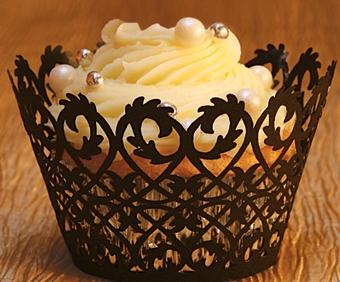
I invested. I ordered a variety pack of 24 baking cups and splurged on a packet of iced flower toppers. I now know where those cooking bloggers get them … and, to my simple vanilla recipe I added an over-ripe banana, and made my own icing (oh yes indeedy) with icing sugar and cream cheese. In their gorgeous little 1950s cups, with little flowers atop the cream cheese, my cup-cakes had centre place.

Now when a morning tea comes up, there’s an understanding that the Queen (that’s me) will do the cup-cakes. I’ve advanced so far that I now own a cup-cake carry box and a three tier cup-cake stand, and will consider special requests. I’ve even started answering to Martha and wearing a solid anklet.

As long as I have access to the little internet shop in Sydney I can handle anything.

Three Perfect Days in NARITA

Most people who fly into Tokyo land at Narita and promptly get a train to Tokyo; passing up a stay in one of the oldest cities in Japan. Although the name Narita does not appear in written records until 1408, stone tools dating from 30,000 years ago have been found on the site of Narita airport. So for our three perfect days we will investigate Narita.We are staying at the Holiday Inn which is a short drive from the airport in their little shuttle bus. Breakfast is served in the restaurant, and although there is a small selection of western dishes (fruit, scrambled egg, tomatoes and toast), it mainly caters for the Asian market with plenty of rice, vegetables, miso soup and congee.

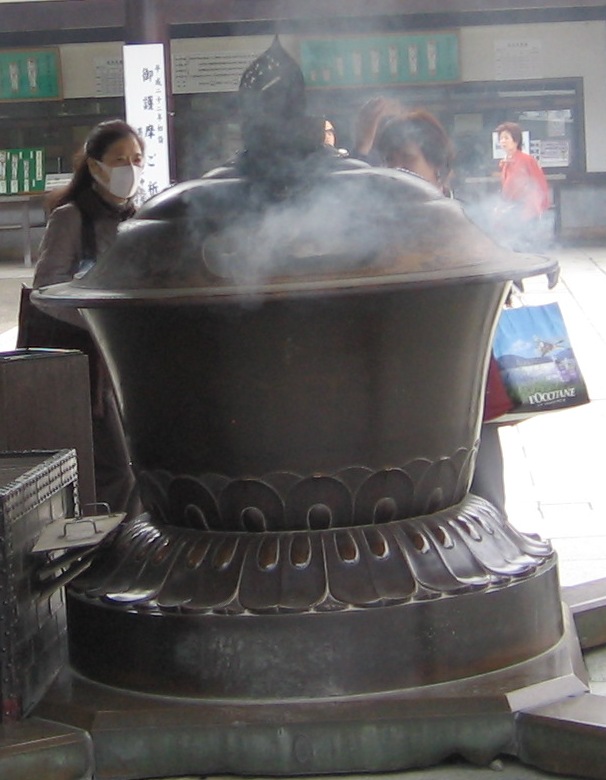
After breakfast we plan to visit Narita-san Shinsho Temple via the circular bus. The Temple is quiet and at the entrance there is a raised fire pit where people congregate and wave their hands in the smoke. We learn later that the Temple is a shrine to Fudomyoo (a fire god) and the fire is a symbol of his wisdom; the waving of hands in the smoke is said to extinguish earthly passions and bring us to a higher state of mind.

Fire Pit Narita-san

The Temple is built of simple grey stone and there are lots of separate halls and smaller buildings and shrines, and one enormous 58 metre high Pagoda. There is a large courtyard where people sit and chat, and a young mother and child dressed in traditional dress are constantly photographed by tourists—including us.

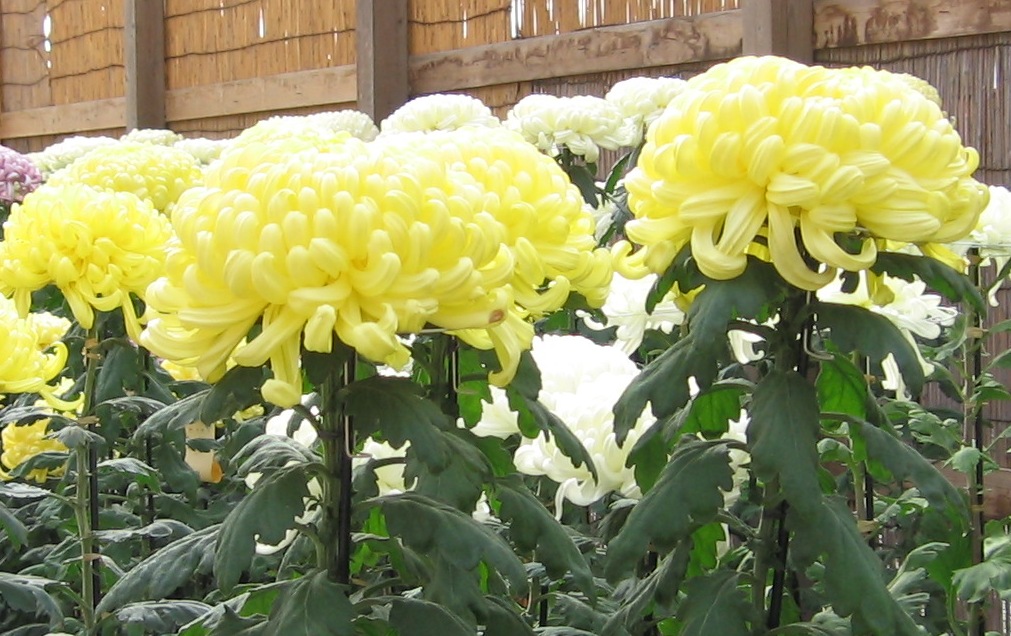
Leaving the Temple we find ourselves in a chrysanthemum garden—the blooms are the largest we’ve ever seen and the colours are amazing with the common white and yellow sitting next to rows of pink, lilac, orange and red. It’s all very orderly with separate greenhouses for each colour. We leave the garden and walk slowly down the main cobbled street. There are cafés and restaurants, gifts and souvenirs, jewellery and accessories, and market stalls selling trinkets, chopsticks, and the ubiquitous gold and silver waving cats. Will we get one? Why not—he may bring us luck.

Chrysanthemum Garden

Back on the bus we hop off at a shopping centre and check out the supermarket. Dinner is sushi, shredded beef and noodles, and a couple of Kirin beers. At the hotel, over another Kirin, we pore over the train timetable and finally surrender to a day trip to Tokyo the next day.The rail transport in Tokyo is awesome. It’s never late, it’s clean and although we have all seen and heard of the train pushers at commuter time; when we are travelling it’s remarkably quiet. The train takes us to the main station in Tokyo where there is an underground shopping centre. You can get lost in here. You name it, you can buy it. There is also a large Daimaru department store which has one level entirely devoted to cakes. We are so amazed by the size and presentation of these sweet gastronomic delights that we simply stand and stare.

There are elaborately decorated sponge cakes, gateaux, giant éclair cakes, birthday cakes, wedding cakes, cream cakes, yellow cakes, green cakes, pink and blue baby cakes, animal cakes, and cakes made to look like the Eiffel Tower, the leaning tower of Pisa, and … oh my, look there, it’s the Sydney Opera House! We tear ourselves away from this sweet feast to find a café for lunch.

It’s pouring down when we leave the station and hurriedly buy our tickets to Keisei Narita. The train trundles along—it seems to be taking longer than it did to get there and it’s packed with school children. You get up and look at the map, and then … “Er, this train isn’t going to Narita.” What! Where is it going! “Chiba something.” Faaarrrkkkkk!!!!  Off the train at the next station; we cross over the bridge and seconds later another train takes us back to where we started. This time we’re on the right train, and we thank Japanese rail for its efficiency—even though we arrive back at Keisei Narita, in the rain and dark, an good hour later than planned and have to wait 30 minutes for the little circular bus to the hotel.

The next day is shopping day and we take the bus to the Aeon Mall. This is a huge shopping centre and we spend an extraordinary amount of time trying on clothes and shoes. A couple of jumpers and three pairs of shoes later we stumble across the Hello Kitty shop. This shop is as big as small department store in itself, and any Hello Kitty item you could imagine is here; from suitcases to pencils and everything in between including t-shirts; pyjamas; baby clothes and accessories; beanies and gloves; slippers and gumboots; glasses (both for wearing and drinking out of); crockery, cutlery and bakeware—yes, you can buy moulds for Hello Kitty cupcakes—jewellery, shopping bags, and every item of stationery, all emblazoned with that cute little kitty face.

Hello Kitty Shop, Aeon Mall

We climb aboard the circular bus holding our Hello Kitty shopping bags aloft and smile childishly at everyone on the bus. They just look and nod. But who cares? We’ve had a great time, and as it’s our last night we will splurge at dinner in the hotel restaurant.

Sayonara Narita!

Three Perfect Days in Lido di Ostia

The sun is shining; both the Mediterranean and the sky are so blue it’s hard to tell where the horizon is, and restaurants are setting up for breakfast in the Piazza. Buongiorno Roma!

Well, Ostia to be exact. Where is Ostia? It’s about 20 kilometres south of Rome and is also known as Lido di Ostia—meaning Ostia beach. It’s our first day and from our little shuttered balcony we look out over the esplanade to the ocean, and shading our eyes from the glare of the sun, we count the little yachts bobbing up and down in the marina.

It’s late September and hotter than we expect for the time of year. The white and terracotta houses facing the ocean all have their shutters drawn to keep the them cool, and the gardens and window boxes are a blaze of colour and fragrance with deep purple bougainvillea, red and white geranium, lavender, and bright yellow jasmine and honeysuckle. We decide to explore the town and surrounding area and make our way past the cafés and towards the CBD.

Lots of little boutique shops, but more expensive than we thought. Walking along the back streets is an obstacle course of trestles, racks and boxes displaying shoes, bags, clothing and accessories. You pull a jacket off a rack and check the label—made in China—mmm, that’s a bit disappointing. Perhaps we’ll hold off on the purchases until we get to Rome.

For  lunch we settle on a little place tucked away down a cobbled street and opt to share a traditional pizza napoletana, a taste sensation smothered in fresh tomatoes and sprinkled with oregano. Later we saunter back along the esplanade for a closer look at the yachts in the marina. Dinner is a selection of antipasto in the little bar below our hotel, accompanied by a glass of chilled rosé, and later in the evening we enjoy a second glass while sitting on our balcony before closing our shutters for the night.

The following day finds us on Lido di Ostia station about to board the train for Rome. You want to go to the Vatican but after some debate we settle on the Colosseum. The train takes about 35 minutes and is obviously the commuter train to Rome—it’s packed with businessmen and very chic Italian ladies who manage to look stunning in their camel coats, leather bags, and perfect make-up. In our jeans, sneakers and back-packs we look quite the poor cousins.

The Colosseum is jam packed. Is it always like this? There are groups of centurions who will take your photo—and your camera if you refuse to pay them 50 Euro for the photo. We climb the hill behind the monument and look down on the town. There are olive trees on the hill and we wonder how old they are. Olive trees can live for hundreds of years—in fact the oldest trees are in Lebanon and said to be around 1,500 years old. What tales they would tell.

In the evening we take a walk along the esplanade before dinner. It’s cooler now with a slight breeze coming off the ocean, and the cafés are preparing for the evening rush. The sound of live music drifts on the breeze—it’s coming from a large marquee and we wander over to take a look. It’s a wedding expo and the place is packed. We arrive to a catwalk parade of white puffy organza creations and tuxedos. Most of the (paying) guests seem to be mama and papa who are about to fork out thousands of euros for this one day in their daughter’s life. Champagne flows and the opera singer is in full voice. We return to our hotel to the distant strains of Ave Maria.

Today is our last day and you are determined to see the Vatican, but this time we take a local bus that takes us on a sight-seeing tour of Ostia and crosses a narrow waterway. “That’s the Tiber” you say. No it isn’t. “Yes it is” and you point on the map. So it is. Somehow I expected it to be, well, bigger.

Finding the Vatican is easy—it’s just a matter of following everyone else. There is a sign at the end of the closest queue that tells us the waiting time is two hours. “Two hours” you say, “I’ve waited less than that for a Disney ride”. So instead we wander around the side streets and are quite enjoying our own sight-seeing tour until a Caribineri crosses our path and tells us we can go no further. He seems quite a nice young man. What a pity he’s dressed like a paratrooper and carrying a rather large gun. He does however move us on ever so politely with rather bored smile—he probably does this all day, every day.

Back on the main street we finally hit the shops and it takes us three times as long to walk back to the station. There is a rather nice pair of grey suede boots in the window of a shoe shop. I’m tempted but doubt I have space for them in the luggage. Instead I buy a cute little leather purse in the shape of a cat with a diamante collar, for one of my girls.

After dinner we spend our last evening on the balcony absorbing the sights and sounds—the building blocks of memory. We have an early flight tomorrow.

Arrivederci Roma!

The Lights

There’s a huge traffic jam just past the airport. It’s 5pm and dark as mid-night—it’s also freezing cold and drizzling rain and car windows are fogging up. Everyone huddles into coats, pulls collars up and beanies down and tucks gloved hands into pockets and sleeves in a vain attempt to keep warm. The streets are packed as families with young children waving bright laser wands meander along the footpath making their way to the beach.

We’re in the north west of England in a rather raunchy and burlesque seaside town; that in general conversation you might say ‘had seen better days’. It’s late October and the traffic and people are here for one reason only—Blackpool Illuminations, known locally as ‘The Lights’.

The Lights’ website proclaims that this is an annual multi-million dollar extravaganza of artificial lights including coloured globes, fibre optics, strobe and search lights, neon and lasers. Some are strung across the promenade and over the road so you drive underneath them and the car’s headlights reflect prisms of colour from the wet road. Other lights decorate the famous Blackpool trams with some converted into rockets and sailing ships that travel slowly and majestically along the 10 kilometres of promenade. More lights illuminate the landaus—the horse-drawn carriages that patrol the promenade for passengers who prefer the slower pace of a bygone era.

On the beach side and facing the road and tramway, enormous fairy-tale tabloids appear animated by a sequence of twinkling lights. There’s Puss in Boots, Cinderella, and Sleeping Beauty just waking up with a kiss from her Prince, while further along Little Red Riding Hood chats with the wolf. All this stretches along the beachfront—past the three piers and the Tower which is so highly illuminated it’s probably visible from space.

The Lights program includes an orchestrated and minutely choreographed ‘switch-on’ which often includes someone rich or famous, but most likely both, to actually flick the switch. The switch-on concert is free and usually takes place in front of the Tower, with an estimated audience in excess of 10,000. In 2010 the switch was flicked by Robbie Williams (quite obviously rich and famous), and past flickers (or should that be flashers?) include David Tennant, Geri Halliwell (formerly a friend of Posh Becks) and the Bee Gees! The identity of the flicker is kept secret until opening night.

The event first kicked off in 1912 using around 10,000 light globes and the Council estimates that it now costs over $A4.2 million to put on the show each year with equipment worth over $A17.5 million. That’s a lot of light globes.

The Lights run from September to November and extend the summer season by a good eight weeks giving an extra financial boost to the town before it closes for winter. This year it’s estimated that over 3.5 million visitors will pour into Blackpool during the summer season and spend approximately $A482 million during the Lights alone.

Meanwhile the traffic is still bumper to bumper northwards along the Promenade. Past the Disney theme where everyone ooh’s and aah’s at the enormous animated cartoons, and progressing to Hollywood with its larger-than-life movie star entertainment and celebrities old and new. Humphrey Bogart sits alongside Johnny Depp, while Clark Gable takes tea with Emma Watson (nice one Emma—but he really doesn’t give a damn).

Dr Who is up next including the Daleks and the TARDIS, though unfortunately not the afore-mentioned gorgeous Doctor number 10 (who could take me into space to see the Tower anytime he likes), before visiting the underwater Coral Islands teeming with twinkly tropical fish, and on to the finish.

It’s now 7.30pm and the entire drive has taken two and a half hours but at least it’s stopped raining, and with a fish ‘n’ chip supper to look forward to on the way home it’s a good night’s free entertainment.

The writer grew up in the town and still has nightmares about family outings every year to view the Lights. Of course, the gorgeous Doctor wasn’t included then …

In 2012 the Lights will celebrate its centenary.

Three Perfect Days in RAROTONGA

OK—I can hear you all saying it … we wondered how long it would be before Raro got a guernsey.

When I first visited Rarotonga you had to go via Auckland—fine as long as you didn’t have to wait seven hours at Auckland airport. About 18 months ago Australia finally realised that Raro existed and you can now fly direct from Sydney. So come and join me for three days in paradise.

Landing at Raro is like landing in a friend’s back-garden. It’s not the biggest international airport, and as we struggle down the steps and make our way across the tarmac, there’s Jake with his ukulele, singing Maori songs of welcome as we join the queue at customs.

We’ve rented a beach house in Muri for our stay, and hired a car to get us around the island. There is only one road so even though I’m totally navigationally dyslexic, it’s highly unlikely we’ll get lost—although trying to find the house in the dark and without road signs is a tad challenging. But find it we do and the key is under the mat—as promised.

We wake the following morning to the sound of roosters and brilliant sunshine. Walking across the tropical garden, laden with hibiscus and frangipani, we seat ourselves at the huge deck over the beach; gaze across the lagoon; watch the waves crash over the reef, and toss up whether to have a swim or breakfast first. That being the biggest decision we have to make during our stay.

Deli-licious, a little café within a two minute walk, gets the nod, and once there we ponder over whether to go for the Big Breakfast (it’s big …), quiche, or one of the many muffins and pastries on display. We sit in the garden sipping our flat whites and watch the world go by. Later on we walk up the beach and float away the afternoon in the lagoon, before checking out happy hour at the Pacific Resort. A couple of cocktails later we stagger back down the beach and fall into bed.

The following day we pass on breakfast and take our little convertible car (top down) into the main town of Avarua and browse the shops perusing hand-woven bags, hats and fans from Mangaia Island; traditional wood carvings; beautiful hand-made quilts known as tivaevae that tell of family history and stories through their intricate detail, and of course the ever present black pearl jewellery set in silver or gold, and created and designed on the island.

Lunch is at Trader Jacks, where we sit on the deck working our way around plates of salt and pepper calamari with a tropical salad, and watch the fishing boats head towards the reef. We could have chosen pizza at Café Salsa, or Pacific chips (potato, taro and yam) with garlic mayo at the Blue Note Café in Banana Court. Maybe tomorrow …

Our drive back takes us around the island, past the wharf and airport, and through the many villages along the way. We stop at Wigmore’s Superstore to stock up on a few things, and sit outside with divine peanut butter ice creams to cool us down. Further along we pass the Governor-General’s residence (nice), and pull into a beach at Titikaveka where the lagoon gently laps on the sand and there are only a couple of other people in the water.

In the evening we pass on the cocktails and instead pull out the BBQ and cook up some marinated chicken with paw-paw salad which we eat on the deck while sipping a crisp cold white, and watch the sun sink slowly down into the Pacific.

The next day we have an early morning swim as we’ve booked a Captain Tama glass bottom boat cruise which includes lunch. The boat leaves the Sailing Club late morning and takes us along the lagoon around Taakoka motu where we feel the spray from the reef, then along a little further where we drop anchor while you and other passengers jump into the water with snorkeling gear. I stay on the boat and daydream while listening to the crew sing and play their ukuleles. What a life! Then it’s everyone back in the boat and we turn towards Koromiri Island for a BBQ lunch—once again serenaded by the crew.

Back at the Sailing Club there’s something happening on the beach. There is a red carpet and a large heart of hibiscus flowers set in the sand. It’s a wedding! How gorgeous. So of course we sit and watch. A warrior canoe appears on the lagoon and to the echoing sound of the conch shell the bride and groom are ferried to Koromiri accompanied by Maori singing and chanting, and the bridal party follows in a glass bottom boat. We decide to take in the atmosphere and order two glasses of champagne which we drink sitting on the sand and toast the happy couple.

The following morning finds us back at the airport for our return flights. This time Jake sings songs of farewell and hopes to see us again next year.

You betcha Jake!

The writer flew Air New Zealand (at her own expense), and stayed in accommodation through www.rentraro.com

Three Perfect Days in NEWTOWN

No, not Sydney but Newtown! Newtown is a suburb of Sydney about four kilometres south-west of the CBD, and about five minutes by train, and was originally developed as a farming and residential area in the early 19th century. By 1870 tiny terraced houses were springing up throughout the area—literally two-up, two-down with adjoining walls only one brick thick, most of these houses were only four metres (around 13 feet) wide. Hundreds of these houses remain; many renovated and modernised with only their façade showing their history, while others have developed into the shops and cafés that adorn the main street: King Street. Newtown was subsumed into the City of Sydney in 1949. But Newtown today is so much more than its history shows.

Take a walk with me down King Street. We’ll start at Newtown Station and walk to St Peters.

The street has changed little in design since it was built. The shops all have verandahs extending over the footpath so we can walk in the shade in the summer and shelter from the rain in winter. A thriving café culture provides the opportunity for coffee and cake on the footpath or in the open windows, where we watch the world go by—and what a world we see.

Newtown’s population is a hotch-potch of society including gays and lesbians, and even those somewhere in between; students from the nearby University of Sydney; young public servants and corporate managers; aging hippies who have yet to move on from the 60s, and younger 20 and 30 somethings looking for what the aging hippies once had. All of them pass by our café.

Live music is coming from somewhere down the street. Ah yes, here come the younger hippies in their flowing, flowery dresses and colourful tie-dyed pants and t-shirts, singing and dancing as they weave their way along the footpath. No-one pays them much attention—it’s fairly common place in Newtown.

Revived by the coffee we pop into one of the many op-shops selling pre-loved, brand-name clothing at a fraction of the normal price. A pair of bright lime green leather boots attract my attention—dammit they’re not my size. Would I have bought them if they were? Well I could have been tempted—let’s face it you don’t see lime green boots every day …

Further along we can have a tarot reading by Psychic Sarah, or get a temporary henna tattoo for $15. More op-shops; second hand furniture shops; book shops; a shop selling nothing but buttons of every shape, size and colour imaginable; and another with the most divine stained glass lamps that twinkle in vivid blues and rich reds; yet more cafés and restaurants and finally we reach our accommodation—a slightly up-market backpacker hotel.

This hotel was built in the 1920s, and although it’s been modernised and lost its old façade, its rooms still have the original parquetry flooring. It’s three storeys and there is no lift. There is however a lovely guest lounge complete with large squishy sofas, and a modern kitchen behind the reception which also has the original old flagstone floor—worn so smooth that it’s established a shine all its own.

As well as the beautiful parquetry, each room has its own tiny railed balcony accessed by some lovely old French doors. The balcony is just big enough to take a small bistro table and two chairs that can be moved inside the room in inclement weather. Each room also has its own bathroom—hence the up-market aspect. But the best thing about this hotel is its location—smack in the middle of King Street.

We unpack, sort ourselves out, and set off for dinner. Turning left onto King Street we can choose Italian, Turkish, Indian, Chinese or the Steak House. Turn right and we can have African, Thai, Indian, Korean or simple fish and chips at a place called Newtown Beach. The fish and chips come wrapped in newspaper and we eat them with our fingers while sitting under sunshades and pretend we’re at Bondi Beach instead.

On our way back to the hotel we pass a pub where we stop for a nice glass of red and listen to some smooth jazz by a group of young lads—very talented and probably from the Sydney Conservatorium.

By the time we get back to our room it’s raining. We open the French doors and sit by the balcony sipping another glass of red while listening to the sound of the rain on the Plane trees, and gazing across the night sky watching the planes flying low as they come down to land at Sydney airport.

That’s another thing about Newtown—it’s directly under the flight path of Sydney’s third runway. The planes are so low their landing lights almost touch the roofline. There is however a curfew from 10pm until 6am when the jets wake us up. But no matter—we’re in the most fascinating place in Sydney and the early wake-up means no waiting for the warm ham and cheese croissants and hot chocolate from the French bakery round the corner.

Bon appetite!

Three Perfect Days

There was an inflight magazine, Hemispheres I think it was, that used to include an article in each issue on Three Perfect Days in one particular country, city or town. It included things to do and see; places to go and how to get there; where to eat and drink, and how not to blow your budget while you’re doing all this. Some of the places were interesting; others were just bizarre, but they were without doubt perfect because someone else was paying.

Each article was written by a journalist or travel writer who was paid not only to write the piece, but expenses, accommodation and fares were paid for as well. Apparently it’s called travel writing.

I always thought that would be the perfect (pardon the pun) job. What fun I thought—travelling to exotic and exciting places; staying in five-star hotels; eating in fabulous restaurants, and probably rubbing shoulders with the rich and famous. 

So I enrolled in Travel Writing 101—and thereby killed the dream.

In his opening sentence the presenter exploded the myth of the travel writer sitting in business class sipping champagne and being whisked off in a limo to his destination, by telling us that 90 per cent of travel writing is done by junior writers in an office somewhere in the bowels of your local city. He then went on to tell us how much money they made. I won’t upset you by saying it out loud, but believe me, I’m sure I could make a better hourly rate at Pizza Hut!

Our assignment for the week was to write a piece about somewhere we had never been and knew nothing about. So off we went to trawl the internet for information, and pictures, because you can’t have a travel article without the enticing pictures.

The following week there we all were with our travel pieces. I had been to Canada for three days, to a town called Gander (look it up—I had to …) and had written 700 words on an aviator’s paradise. I told of its history, its customs, its food, its scenery, and its icebergs. It read just as if I’d been there.

One lady had been to the Oktoberfest and enjoyed excellent German beer and sausages; donned a German costume just for fun, and joined in a knee-slapping dance. Another had spent three days in Morocco touring bazaars and eating couscous—she came home with a lovely hand loomed prayer mat. And one chap had spent his time with the Maasai people in Tanzania and showed us how they dance by jumping up and down.

And so I have decided to include in my blog Three Perfect Days in a place of my choice—I shall bring you the world—and we will travel it together.

Commercial television

I don’t watch commercial television. I’ve tried. I’ve really tried. Most recently the other night, when a few colleagues at work were talking about some show that sounded interesting, and I decided I’d give it try. So I settled down with a cuppa, and the remote—just in case …

The show started. It was fun and I was sort of getting into it when after about ten minutes ads came on. I watched the ads and slowly felt the edges of my brain turning to pea soup. Back came the show, then after another ten minutes, more ads. I sipped at my cuppa and patted the dog by my side. The pea soup was thickening. Back came the show—by now I’d all but forgotten what it was about—it also seemed to have missed something out and not quite returned to where it left off. Or maybe it was the pea soup confusing me.

More ads. This time I reached out for my little crossword book and pencil—anything to stop the pea soup from spreading, and when the show came back on I’d lost interest and reached for the remote.

But it made me think. Why do they do that? Yes I know—dollars, but why use that format. Have we become a nation with such a short attention span that we can’t concentrate on anything for more than ten minutes at a time? Do we need a break to absorb what we’ve seen and embed it in our minds before returning to it? We can’t watch something for an hour without losing track of the plot? Mind you, this particular show didn’t seem to have a plot.

And speaking of plots, and actors—were we? Yes we were—you just lost track. I watched a download last night (no ads in those) where one actor was so wooden that I felt like hitting her up the side of the head with a plank of wood to bring her back to life. Actually, you could have painted a face on the plank of wood and used that in the actor’s place. I don’t think anyone would have noticed the difference. But I digress. 

Here’s a suggestion. Run the show at length, then show half an hour or so of ads. Those that want to watch the ads can, and those that don’t can find something else to do in the interim. Walk the dog; play with the kitten; talk to the kids (now that’s a novel experience); make tomorrow’s lunch, oh no wait I know—check their phone! Phew I said it …

Or another idea (I’m on a roll now …) an entire channel devoted to ads. Run about two hours of ads, and then have a quick half hour reality show using the products from the ads. How awesome would that be? You could have cooking shows following two hours of food products; house renovation shows using products from electrical appliances; gardening and furnishing ads—I might even watch that myself given my current circumstances, or the Open University could run short courses following insurance and banking ads. Finance 101: Which bank offers the best short-term investment rate and how does it impact on your private superannuation? Discuss. 

Channel 10, you can contact me on this number: 000WTFTV.